
Executive Summary
- Institutional educational capitalization necessitates robust financial architecture to sustain long-term objectives.
- Effective debt amortization strategies are crucial for maintaining fiscal health and intergenerational equity within academic institutions.
- Strategic financial planning, integrating philanthropic capital and meticulous debt management, optimizes resource allocation and minimizes risk exposure.
Understanding Institutional Capitalization Dynamics
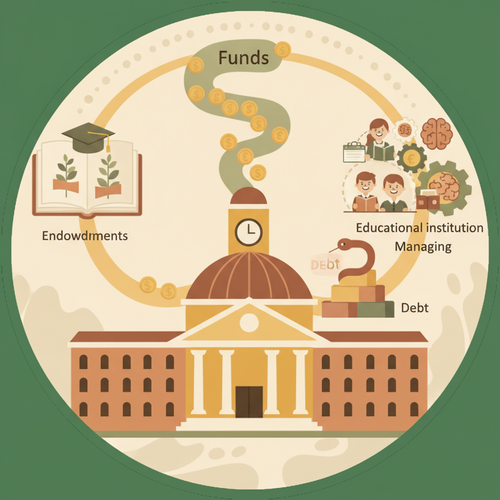
Educational institutions operate with intricate financial ecosystems. Their long-term viability hinges on effective capitalization strategies. This involves a delicate balance of endowment management, philanthropic infusions, and judicious debt utilization.
Endowment management stands as a cornerstone. It provides a perpetual source of operating revenue. Prudent investment strategies ensure intergenerational equity. This means current spending does not compromise future institutional capacity.
Defining Educational Endowment Structures
Endowments are typically structured as restricted or unrestricted funds. Donors often specify usage. Restricted funds support particular programs or professorships. Unrestricted endowments offer greater operational flexibility.
Investment committees bear significant fiduciary responsibilities. They oversee asset allocation. Their decisions directly impact spending policies. Sustainable spending rates are paramount for endowment longevity.
Expert Insight: “Optimizing an endowment’s real return above inflation and spending ensures its purchasing power endures across generations. This demands sophisticated portfolio management and a disciplined spending rule.”
The Role of Philanthropic Capital in Long-Term Solvency
Philanthropic capital injection is transformative. It fuels strategic initiatives. New facilities, research grants, and student aid often depend on it. These contributions directly enhance an institution’s capital base.
Capital campaigns are primary drivers. They target significant gifts. These gifts often establish new endowments. They also fund major capital expenditures. This reduces reliance on debt financing for growth.
Strategic Debt Issuance and Fiduciary Oversight
Debt financing provides immediate capital for large projects. These include infrastructure development or major renovations. However, it introduces significant financial obligations. Meticulous planning is essential.
Issuing debt requires extensive due diligence. Institutions must assess their repayment capacity. Market conditions heavily influence borrowing costs. Strategic timing can yield substantial savings.
Assessing Debt Capacity and Credit Ratings
An institution’s credit rating is critical. It determines interest rates. Higher ratings indicate lower risk. Rating agencies evaluate financial strength and operational stability.
Key metrics include the debt service coverage ratio. This measures an institution’s ability to meet its debt obligations. Strong liquidity and a diversified revenue base bolster creditworthiness. You must maintain healthy operating margins.
Structuring Tax-Exempt Municipal Bonds
Tax-exempt municipal bonds are common for educational institutions. They offer lower interest rates to investors. This translates to reduced borrowing costs for the issuer. Eligibility requirements are strict.
Bond covenants are integral components. They outline issuer obligations. These may include reporting requirements or asset restrictions. Adherence is critical to avoid technical default. Non-compliance can severely impact future borrowing.
Further information on debt service coverage ratio can be found at: https://www.investopedia.com/the-fastest-college-degree-for-paying-off-student-loans-ranked-by-early-career-salary-and-debt-11983967
Considering Alternative Financing Mechanisms
Beyond traditional bonds, institutions explore other options. Public-private partnerships offer a viable alternative. They leverage private sector expertise and capital.
Lease-purchase agreements provide flexibility. They allow for asset acquisition without immediate large capital outlay. Philanthropic bonds, a niche product, blend debt with donor intent. These require careful structuring.
Advanced Debt Amortization Methodologies
Debt amortization is not merely repayment. It is a strategic exercise. Optimizing payment schedules impacts financial flexibility. It also influences long-term resource allocation.
Institutions often employ diverse amortization strategies. These depend on the debt type and financial objectives. Dynamic management is key. It adapts to changing economic landscapes and institutional needs.
Optimizing Repayment Schedules for Intergenerational Equity
Amortization schedules should align with asset useful life. Long-term assets justify longer repayment periods. This distributes costs across generations of beneficiaries. It prevents undue burden on current students or faculty.
Accelerated repayment can free up future capital. However, it increases near-term cash outflow. Institutions must weigh these trade-offs carefully. A balanced approach supports sustainable growth.
Leveraging Interest Rate Swaps and Hedging Strategies
Interest rate swaps can convert variable-rate debt to fixed-rate. This mitigates interest rate risk. Conversely, fixed-to-variable swaps can capitalize on declining rates. These are sophisticated financial instruments.
Hedging strategies protect against market volatility. They stabilize debt service costs. Derivatives contracts can achieve this. However, they introduce counterparty risk. Expert financial advisory is indispensable.
The Impact of Refinancing and Defeasance Operations
Refinancing reduces interest expense. It can also extend maturity dates. This improves cash flow management. It is often undertaken when interest rates decline significantly.
Defeasance is more complex. It involves setting aside funds to cover future debt obligations. This effectively removes debt from the balance sheet. It can enhance credit metrics. Defeasance is typically for specific, high-cost debt tranches.
Asset-Liability Matching in Educational Finance
Effective financial management requires aligning assets with liabilities. For institutions, this means matching endowment returns and operating surpluses with debt service and operational expenses. It ensures solvency.
Misalignments can create significant risk. Interest rate fluctuations impact variable-rate debt. Market downturns affect endowment values. Both scenarios challenge an institution’s financial stability.
Aligning Investment Portfolios with Debt Service Requirements
Investment portfolios generate returns. These returns should support debt service. Institutions must consider yield requirements. Liquidity needs for upcoming principal and interest payments are paramount.
Strategic asset allocation accounts for these liabilities. Diversified portfolios mitigate concentration risk. They also aim for consistent returns. This provides a reliable source for debt obligations.
Managing Liquidity and Contingent Liabilities
Maintaining adequate liquidity is critical. It covers unforeseen expenses. It also ensures timely debt payments. Cash reserves and readily marketable securities form the liquidity buffer.
Contingent liabilities pose unique challenges. These include potential legal claims or environmental remediation costs. Institutions must quantify and provision for these risks. They can impact future borrowing capacity.
Operational Efficiencies and Debt Service Coverage
Operational efficiency directly impacts financial health. Streamlined processes reduce costs. Enhanced revenue generation improves debt service coverage. This strengthens an institution’s fiscal standing.
Every operational improvement contributes. It frees up resources. These resources can then be directed towards debt reduction. Or they can fund strategic academic initiatives.
Enhancing Revenue Streams for Sustainable Debt Management
Diversifying revenue sources is vital. Tuition fees remain primary. However, research grants, executive education programs, and auxiliary enterprises offer additional income. These bolster overall financial resilience.
Philanthropic giving initiatives are crucial. They provide capital for both current operations and endowment growth. Strategic partnerships with corporations also create new revenue opportunities. This ensures long-term viability.
Cost Containment as a Debt Amortization Catalyst
Rigorous cost management is paramount. Identifying and eliminating inefficiencies directly impacts the bottom line. Operational audits often reveal areas for improvement. Every saved dollar can reduce reliance on debt or accelerate repayment.
Strategic procurement, energy efficiency upgrades, and technology optimization are key. These initiatives lower operating expenses. This directly improves an institution’s ability to manage debt obligations. It enhances financial stability.
Regulatory Compliance and Governance Frameworks
Educational institutions operate under strict regulatory oversight. Compliance is non-negotiable. Adherence to rules ensures investor confidence. It also protects institutional reputation and future access to capital markets.
Robust governance frameworks are essential. They guide financial decision-making. Transparency and accountability are fundamental tenets. Strong governance minimizes risk and promotes ethical practices.
Navigating SEC Rules and Bond Covenants
The Securities and Exchange Commission (SEC) regulates municipal bond offerings. Institutions must meet disclosure requirements. This ensures market integrity. Non-compliance carries severe penalties.
Bond covenants define specific obligations. These can include financial ratios or capital expenditure limits. Institutions must continuously monitor adherence. Any breach can trigger an event of default. This is a serious concern.
Learn more about endowments at: https://www.investopedia.com/terms/e/endowment.asp
Best Practices in Board-Level Financial Oversight
An engaged board of trustees is indispensable. Its finance committee provides critical oversight. Members should possess deep financial expertise. They challenge assumptions and ensure fiscal prudence.
Regular financial reporting ensures transparency. Independent audits verify financial statements. These practices reinforce accountability. They build confidence among stakeholders and potential investors.
Case Study: Elite University’s Dynamic Amortization
Consider Elite University’s recent bond issuance. They secured $500 million for a new science complex. This bond included both fixed and variable-rate tranches. Their strategy aimed for flexibility and risk mitigation.
Initial Debt Structure and Funding Needs
Elite University issued $300 million in fixed-rate, 30-year bonds. The remaining $200 million was variable-rate, 10-year debt. This structure balanced long-term stability with potential interest rate savings. The science complex was a critical strategic investment.
Implementation of a Dynamic Amortization Plan
The university implemented an interest rate swap. This converted a portion of their variable-rate debt to a synthetic fixed-rate. It hedged against rising rates. They also established a dedicated endowment sub-fund. Its returns were explicitly earmarked for debt service on the new complex. This demonstrated strong asset-liability matching.
Outcomes and Future Implications
The swap protected Elite from recent rate hikes. The dedicated endowment fund provided stable debt service. This approach maintained a strong credit rating. It also preserved operational liquidity. The university now considers similar strategies for future capital projects.
Conclusion
Effective institutional educational capitalization and astute debt amortization are not optional. They are fundamental imperatives. Strategic financial stewardship ensures long-term institutional vitality. It supports academic mission fulfillment. You must balance growth objectives with fiscal discipline. Proactive management of both assets and liabilities is non-negotiable. This approach safeguards intergenerational equity. It maintains stakeholder confidence. How will your institution evolve its capital and debt strategies to meet future challenges?