
Executive Summary
- Open Access Intellectual Property (OAIP) drives profound economic and innovation ecosystem shifts.
- Strategic workforce upskilling is critically paramount for organizations to fully leverage OAIP advantages.
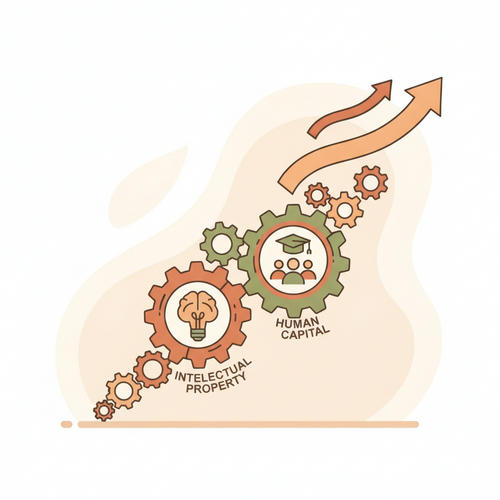
- This powerful synergy redefines human capital valuation and competitive market positioning.
Open Access Intellectual Property: A Paradigm Shift in Innovation Diffusion
Open Access Intellectual Property (OAIP) represents a fundamental divergence from traditional proprietary models. It champions broader dissemination and utilization of knowledge assets. This framework facilitates the rapid transfer of technologies and research findings globally. Organizations gain unprecedented access to a vast repository of innovations, fostering greater collaborative potential and reducing market friction.
The economic implications are substantial. OAIP significantly reduces redundant research and development efforts, optimizing capital allocation for innovation. It accelerates innovation cycles across various sectors, creating a faster pathway from discovery to market application. Market dynamics are fundamentally reshaped by this open paradigm, leveling the playing field for emerging enterprises. Smaller entities and developing economies specifically benefit from lower entry barriers and reduced licensing costs.
This approach democratizes access to cutting-edge advancements, fostering a more inclusive and interconnected global research environment. The strategic deployment of OAIP can therefore catalyze new industry formation and disrupt established monopolies. It also empowers existing sectors with novel tools and methodologies, driving efficiency gains and product differentiation. Businesses must recognize OAIP not just as a resource, but as a core strategic asset for sustained competitive advantage.
Economic Imperatives of Strategic Workforce Upskilling
The increasing availability of OAIP directly correlates with an urgent need for advanced workforce competencies. A pervasive skill gap exists in many critical technical domains. This includes areas like advanced data analytics, artificial intelligence, and specialized engineering. Organizations must proactively address these deficiencies.
Investing in continuous learning and development yields significant Return on Investment (ROI). Upskilling enhances individual productivity and team efficacy. It bolsters overall organizational agility and responsiveness to market shifts. A skilled workforce maintains a competitive advantage in dynamic environments.
Human capital development is no longer merely a cost center. It is a strategic imperative for sustained growth. Companies that neglect upskilling face increasing operational vulnerabilities. They risk rapid technological obsolescence. This commitment secures long-term market relevance and innovation capacity.
Synthesizing OAIP Deployment with Human Capital Development
Open Access Intellectual Property serves as a powerful catalyst for workforce upskilling initiatives. It provides a readily accessible knowledge base for training programs. Examples include open-source software projects and publicly available scientific research databases. These resources facilitate targeted skill acquisition.
The integration of OAIP into learning frameworks optimizes resource allocation. It ensures training content remains relevant and cutting-edge. Organizations can develop highly customized training modules. This directly aligns newly acquired skills with immediate operational requirements. Knowledge transfer mechanisms become highly efficient.
Consider the profound impact on engineering and data science teams. They can directly engage with open-source projects. This offers hands-on experience with real-world applications. Such practical exposure accelerates expertise development. It transforms theoretical knowledge into actionable professional competencies. This synergistic approach maximizes both intellectual and human capital value.
Expert Insight: “Firms integrating Open Access IP into their talent development strategies report higher rates of innovation adoption and significantly improved employee retention metrics. This dual advantage is a game-changer for competitive positioning.”
Macroeconomic Implications: Innovation Ecosystems and Global Competitiveness
The combined impact of OAIP deployment and widespread upskilling extends far beyond individual enterprises. It fundamentally reconfigures national and regional innovation ecosystems. Nations gain a substantial competitive edge in the global economy. This fosters dynamic, knowledge-based economic development.
Sector-specific growth is demonstrably accelerated. Industries like biotechnology, software development, and advanced manufacturing experience rapid evolution. This is due to democratized access to foundational technologies. Regional economic clusters, often built around research institutions, thrive under these conditions. They become magnets for talent and investment.
Governments play a pivotal role. They must establish supportive policy frameworks for both OAIP and workforce education. This includes funding open research initiatives and incentivizing corporate training programs. A robust public-private partnership model further amplifies these benefits. Sustained economic growth becomes a direct and measurable outcome.
Financial Valuation and Risk Mitigation in OAIP Strategies
Investors are increasingly scrutinizing how companies effectively leverage OAIP and cultivate a highly skilled workforce. Traditional valuation models are evolving to incorporate intangible assets more robustly. Human capital metrics, such as employee training expenditure per capita, innovation output per employee, and retention rates, significantly influence enterprise valuation. Intellectual capital ratios provide a deeper insight into the efficient utilization of knowledge assets and human potential. These factors collectively signal superior future growth potential and operational resilience.
However, inherent risks persist. Rapid technological shifts can quickly render specific skill sets obsolete. This phenomenon, known as skill depreciation, presents a constant challenge for workforce planners. Companies must implement agile talent management strategies focused on continuous re-skilling and adaptive learning pathways. Robust mitigation strategies, including cross-training and flexible job design, are crucial for maintaining long-term viability and avoiding talent bottlenecks.
From a mergers and acquisitions (M&A) perspective, a well-trained workforce and a mature OAIP strategy represent a significant value driver. This translates into reduced integration risk, accelerated post-merger synergy realization, and enhanced operational efficiency. Acquiring firms often prioritize targets demonstrating superior intellectual property management and robust human resource development programs. This strategic foresight directly protects and enhances enterprise value, signaling future earnings stability and innovation capacity. Human capital is now indisputably recognized as a critical, quantifiable asset class.
Implementing Scalable Upskilling Programs in an Open Access Era
Developing and deploying effective upskilling programs requires strategic execution and technological leverage. Leveraging Massive Open Online Courses (MOOCs) from reputable institutions offers a highly scalable and cost-effective solution for foundational knowledge. Internal corporate academies can then tailor content to address specific organizational competencies and strategic objectives. Furthermore, fostering peer-to-peer learning networks cultivates a culture of collaborative knowledge sharing and accelerates tacit knowledge transfer.
Advanced technology platforms are essential for efficient content delivery, robust learner management, and performance tracking. Integrated Learning Management Systems (LMS) provide structured learning pathways, facilitate progress tracking, and offer personalized feedback. Incorporating gamified modules can significantly enhance learner engagement and knowledge retention rates. Crucially, robust metrics must track skill proficiency gains, course completion rates, and the direct application of new knowledge in professional settings. This data-driven approach is vital for continuous refinement and optimization of program effectiveness.
Budget allocation for continuous education must be fundamentally re-evaluated as an investment, rather than merely an operational expense. Forward-thinking companies dedicate significant, consistent resources to talent development, often integrating it into capital expenditure plans. This ensures continuous capacity building and empowers employees to proactively embrace new technologies and methodologies. This strategic investment directly underpins future innovation cycles, market leadership, and organizational resilience against disruption.
Legal Frameworks and Ethical Considerations of Open Access IP
The legal landscape surrounding Open Access IP demands careful navigation. Understanding various licensing agreements, such as Creative Commons or specific open-source licenses, is paramount. Proper attribution ensures creators are recognized for their contributions. Rules governing derivative works must be strictly observed.
Ethical implications also warrant significant attention. Ensuring equitable access to OAIP across diverse socio-economic groups is crucial. Addressing the digital divide prevents exacerbating existing inequalities. International agreements play a vital role in standardizing practices and protecting rights across borders. Compliance and governance frameworks are non-negotiable.
Data privacy considerations arise, particularly in collaborative OAIP development environments. Protecting sensitive information while fostering open collaboration requires robust policies. Transparency in data usage builds trust among contributors and users. This thoughtful approach supports a sustainable and ethical open access ecosystem. Intellectual property laws are complex.
Conclusion
The convergence of Open Access Intellectual Property deployment and strategic workforce upskilling is undeniable. It fundamentally reshapes economic paradigms. This synergy drives innovation and competitiveness. Businesses must adapt swiftly to these evolving dynamics. Proactive investment in human capital is non-negotiable. Are you prepared to optimize your organizational talent for this new era?