
Executive Summary
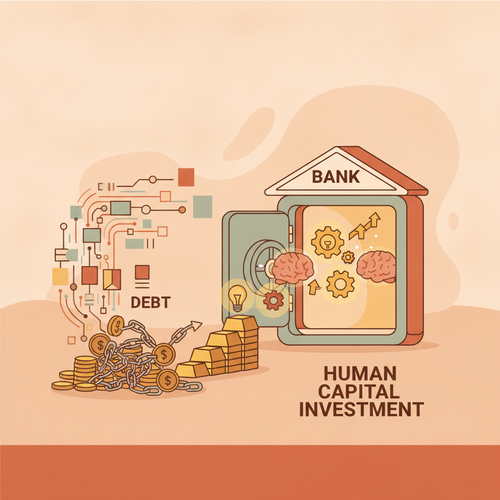
- Algorithmic debt restructuring leverages advanced analytics to optimize financial recovery and stabilize markets.
- Institutional educational capitalization redefines human capital as a quantifiable asset for strategic investment.
- This convergence drives enhanced economic resilience and fosters sustainable talent development ecosystems.
The Paradigm Shift: Algorithmic Debt Restructuring Defined
Algorithmic debt restructuring represents a fundamental shift in managing financial distress. It employs sophisticated computational models. These models analyze vast datasets to predict default probabilities. They also optimize recovery strategies for distressed assets. This approach transcends traditional manual processes.
Modern algorithms assess intricate interdependencies within credit portfolios. They identify optimal restructuring pathways. This minimizes losses for creditors. It also offers viable paths for debtors to regain solvency. The precision of algorithmic intervention significantly enhances efficiency.
Mechanisms of Predictive Analytics in Debt Analysis
Predictive analytics form the core of algorithmic restructuring. Machine learning models ingest historical default data. They process macroeconomic indicators and firm-specific financial metrics. These models accurately forecast future debt service capabilities. They also identify early warning signs of financial instability.
Natural Language Processing (NLP) analyzes covenants and legal documents. It extracts critical terms. This automates complex legal reviews. Such automation drastically reduces turnaround times. It improves the accuracy of risk assessments. These capabilities are transformative for large-scale portfolios.
Optimizing Creditor-Debtor Frameworks
Algorithmic systems facilitate dynamic negotiation strategies. They propose optimal terms for renegotiation. This balances creditor recovery rates against debtor sustainability. The goal is a mutually beneficial outcome. This reduces the likelihood of future defaults. It stabilizes overall financial ecosystems.
Distributed Ledger Technology (DLT) enhances transparency. It streamlines the collateral management process. Smart contracts can automate covenant monitoring. They also enforce repayment schedules. This builds trust and reduces transactional friction. It is a critical enabler for efficiency.
Synergistic Imperatives: Institutional Educational Capitalization Explored
Institutional educational capitalization frames human knowledge and skills as tangible assets. These assets can be strategically valued and invested in. This paradigm shift acknowledges the profound economic impact of a skilled workforce. Education is no longer merely an expense. It becomes an investment generating substantial returns.
Institutions are increasingly recognizing this inherent value. They are developing frameworks to quantify educational outcomes. These frameworks link skill acquisition directly to economic productivity. This bridges the gap between educational investment and financial capitalization. It promotes a human-centric economic model.
Valuation Models for Human Capital Portfolios
Valuing human capital requires advanced econometric models. These models account for educational attainment, specialized skills, and career trajectories. They project future income streams. They also assess the market demand for specific proficiencies. This creates a quantifiable human capital portfolio.
Metrics include lifetime earnings potential and skill obsolescence rates. Return on Investment (ROI) for specific educational programs becomes critical. These sophisticated valuation techniques inform strategic resource allocation. They guide both individual and institutional investment decisions.
Risk Mitigation in Educational Investment Vehicles
Investing in human capital carries inherent risks. Skill market shifts, technological displacement, and individual attrition are factors. Innovative financial instruments emerge to mitigate these risks. Income Share Agreements (ISAs) represent a key mechanism.
ISAs link repayment to future earnings. This shifts risk from the student to the educational provider or investor. Educational bonds could also securitize future human capital. These products require robust underwriting models. They demand transparent performance monitoring. This ensures sustainability and fairness.
Technological Underpinnings: AI, Machine Learning, and Big Data
The synergy between algorithmic debt restructuring and educational capitalization relies heavily on advanced technology. Artificial Intelligence (AI) and Machine Learning (ML) are foundational. They process colossal datasets with unprecedented speed. This generates actionable insights.
Big Data platforms aggregate diverse information sources. These include financial records, educational transcripts, and labor market statistics. Sophisticated algorithms then analyze these data streams. They identify patterns and correlations. This powers predictive modeling and optimization processes.
Leveraging Distributed Ledger Technologies (DLT)
DLT, including blockchain, offers robust solutions for data integrity and transparency. Educational credentials can be immutably recorded. This prevents fraud and simplifies verification processes. Skill-based digital passports could become standard. This streamlines talent identification.
For debt restructuring, DLT secures loan agreements and payment histories. It enables automated, verifiable transactions. This reduces administrative overhead. It enhances trust among all parties involved. The cryptographic security is a significant advantage.
Computational Finance in Restructuring Protocols
Computational finance applies advanced mathematical and statistical methods. It tackles complex financial problems. In debt restructuring, this involves Monte Carlo simulations. It also uses optimization algorithms to model various scenarios. This assesses their impact on financial stability.
These protocols inform strategic decisions. They guide the repricing of distressed assets. They also determine optimal collateral management strategies. The ability to model complex interactions dynamically is invaluable. It provides a significant edge in volatile markets.
Macroeconomic Repercussions and Systemic Stability
The widespread adoption of algorithmic debt restructuring fundamentally impacts macroeconomic stability. It introduces a new layer of market efficiency. Defaults can be addressed with greater speed and precision. This potentially mitigates systemic risk contagion. Financial crises might be contained more effectively.
Institutional educational capitalization also has profound macroeconomic implications. A more accurately valued and strategically invested human capital pool boosts national productivity. It fosters sustained economic growth. It also addresses critical skill gaps. This enhances overall economic competitiveness.
Countercyclical Policy Adjustments
Governments can leverage these algorithmic insights for policy interventions. Early detection of debt distress allows for targeted fiscal support. It also enables proactive monetary policy adjustments. This acts as a countercyclical mechanism. It smooths economic cycles. This approach reduces the severity of downturns.
Policymakers gain granular data on educational ROI. They can strategically fund programs. These programs align with future labor market demands. This optimizes public spending on education. It maximizes its impact on national economic output.
Implications for Global Financial Architectures
The global financial architecture will adapt to these advancements. Standardized algorithmic protocols for cross-border debt management could emerge. This enhances international financial stability. It facilitates more seamless capital flows.
Furthermore, a global market for human capital could develop. This is based on verifiable digital credentials and standardized valuation. This would enable more efficient allocation of talent worldwide. It fosters greater economic integration and shared prosperity.
Strategic Implementation: Case Studies and Best Practices
Implementing algorithmic debt restructuring demands careful strategic planning. Pilot programs in corporate debt scenarios demonstrate early success. These involve highly granular analysis of company financials. They also use predictive models for operational turnaround potential.
Best practices emphasize transparent algorithm design. They also require robust data governance frameworks. Continuous model validation is paramount. This ensures accuracy and adaptability to evolving market conditions. Initial rollouts often target specific asset classes.
Frameworks for Sovereign Debt Optimization
Sovereign debt restructuring presents unique complexities. Algorithmic frameworks can model geopolitical risks. They assess the impact of various restructuring proposals on credit ratings. They also optimize debt sustainability for national economies. This provides crucial analytical support for governments.
These tools facilitate more equitable burden-sharing among creditors. They also ensure better long-term economic stability for debtor nations. This prevents prolonged financial crises. It supports global economic equilibrium. The analytical rigor is unparalleled.
Enterprise-Level Human Capital Development Strategies
Corporations are adopting sophisticated strategies for human capital. They invest in continuous upskilling and reskilling initiatives. These are driven by predictive analytics of future skill demands. This ensures workforce readiness for technological shifts.
Employee educational pathways are increasingly personalized. They are tailored to individual potential and organizational needs. This maximizes the return on educational investment. It also boosts employee retention and productivity. This creates a highly adaptive workforce.
Regulatory Frameworks and Ethical Considerations
The rapid evolution of algorithmic finance necessitates robust regulatory oversight. Legislators must balance innovation with consumer protection. Frameworks for algorithmic transparency are critical. They ensure fairness and accountability in debt restructuring processes. This prevents discriminatory outcomes.
Ethical considerations are paramount in human capital capitalization. Preventing the commodification of individuals is key. Protecting data privacy is non-negotiable. Establishing clear guidelines for the use of personal educational data is essential. This builds public trust and acceptance.
Ensuring Data Privacy and Algorithmic Transparency
Strict data privacy regulations, such as GDPR, provide a foundation. However, specific rules for financial algorithms are needed. Auditable algorithms are crucial. They allow for inspection of decision-making processes. This mitigates bias and ensures equitable treatment.
Transparency extends to the underlying data sources. It also covers the model assumptions. Stakeholders must understand how decisions are made. This fosters confidence in the system. It is vital for widespread adoption.
Mitigating Socioeconomic Disparities
Algorithmic systems, if poorly designed, can exacerbate existing inequalities. There is a risk of algorithmic bias embedded in historical data. This could disproportionately affect certain demographic groups. Proactive measures are essential to identify and neutralize these biases.
Policy interventions can ensure equitable access to educational capitalization opportunities. They can also provide safeguards against predatory lending practices. The aim is to leverage technology for inclusive growth. This avoids creating new forms of economic stratification.
Future Trajectories: Innovation and Disruptive Models
The future holds even greater integration of these concepts. Decentralized Autonomous Organizations (DAOs) could manage debt pools. They could also govern educational investment funds. This offers a new paradigm of peer-to-peer financial interaction. It removes traditional intermediaries.
Personalized learning ecosystems will become highly sophisticated. They will adapt in real-time to market demands. These ecosystems will be seamlessly integrated with financial products. This will fund skill acquisition and career advancement. The possibilities are expansive.
Decentralized Autonomous Organizations (DAOs) in Restructuring
DAOs offer a novel approach to collective governance. They can manage debt restructuring pools through immutable smart contracts. This automates the process. It eliminates single points of failure. Creditors and debtors could collectively vote on proposals. This fosters unprecedented consensus.
This decentralized model enhances trust and reduces administrative costs. It also offers a highly resilient system. Such a framework could revolutionize how large-scale debt issues are managed. It promises greater fairness and efficiency.
The Evolution of Educational Financial Products
Educational financial products will continue to innovate. Micro-credentials and competency-based funding models will proliferate. These link funding directly to demonstrated skills. Blockchain-verified skill passports will become universal.
Dynamic pricing for educational programs will emerge. This is based on real-time labor market demand. Investment platforms will allow fractional ownership of human capital assets. This democratizes access to educational funding. It unlocks new avenues for investment.
Conclusion
The convergence of algorithmic debt restructuring and institutional educational capitalization heralds a new era. It promises enhanced financial stability and optimized human capital development. This synergistic approach addresses complex economic challenges. It offers robust, data-driven solutions. Navigating this landscape requires foresight and ethical diligence. How will your organization adapt to these transformative financial and educational paradigms?