
Executive Summary
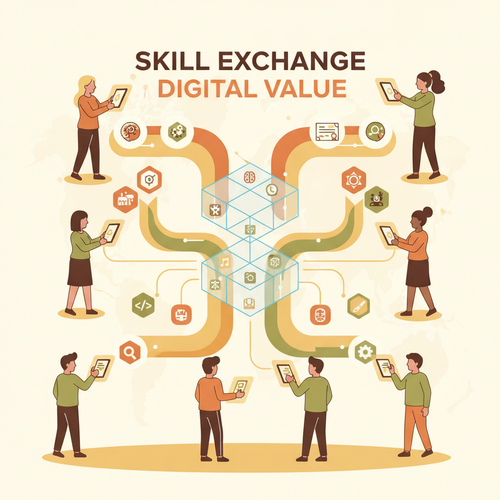
- Decentralized Micro Credential Ecosystems (DMCEs) revolutionize skill validation.
- They enable granular, verifiable attestation of human capital.
- This paradigm shift unlocks scalable monetization pathways for individuals and enterprises.
Foundational Paradigm Shift: From Accreditation to Granular Attestation
Traditional accreditation models face inherent limitations. They often struggle with real-time verification. Furthermore, their static nature fails to capture evolving skill sets. DMCEs introduce a transformative alternative. They focus on granular, immutable attestation of specific competencies.
Blockchain technology underpins this shift. It provides an immutable ledger for credential issuance. This ensures cryptographic proof of skill acquisition. The transparency and security are unparalleled. Semantic web integration further enhances utility. It allows for machine-readable skill verification. This creates a richer, more contextualized talent profile.
Architectural Blueprint: Core Components of a DMCE
A robust DMCE relies on several critical architectural components. Distributed Ledger Technology (DLT) forms the bedrock. It guarantees trustless, tamper-proof record keeping. Transactions are auditable and globally accessible. This eliminates central points of failure.
Smart contracts automate credential issuance. They execute pre-defined conditions upon skill verification. This reduces administrative overhead significantly. Interoperability standards are paramount. W3C Verifiable Credentials (VCs) facilitate seamless data exchange. This ensures credentials function across disparate platforms. Self-Sovereign Identity (SSI) empowers individuals. Users maintain full control over their credential data. They grant selective access permissions as needed. This enhances privacy and data ownership.
Monetizing Human Capital: A New Economic Model
The advent of DMCEs redefines human capital monetization. It initiates a profound disintermediation of traditional recruitment. Middlemen are no longer essential for validation. Individuals can directly showcase verified skills to employers. This reduces friction and cost. Fractionalized skill monetization becomes viable. Talent can offer specific competencies on-demand. This moves beyond traditional employment structures.
Reputation economies will flourish. Verified credentials build trust rapidly. Dynamic skill pricing emerges. Market demand dictates the value of specific, attested skills. The gig economy receives a significant uplift. Freelancers can leverage irrefutable proofs of expertise. This creates a more equitable and transparent marketplace. New revenue streams for specialized proficiencies are generated. This enhances individual economic sovereignty.
Strategic Implementations & Use Cases Across Verticals
DMCEs offer transformative potential across numerous industry verticals. In corporate learning and development, they track employee skill acquisition. Real-time insights guide training investments. For talent acquisition and retention, DMCEs streamline vetting processes. Employers verify candidate skills instantly. This reduces hiring cycles and associated risks. Academic institutions can issue digital diplomas. These are instantly verifiable globally. This supports lifelong learning initiatives.
Professional licensing bodies benefit immensely. DMCEs ensure continuous compliance monitoring. They verify mandatory certifications efficiently. The healthcare sector can track medical professionals’ credentials. This enhances patient safety and regulatory adherence. Government agencies can utilize them for public service training. This improves bureaucratic efficiency. Financial services can verify specific compliance training. This mitigates regulatory exposure. The applications are extensive and diverse.
Mitigating Systemic Risks: Governance and Interoperability Challenges
Implementing DMCEs is not without challenges. Data privacy remains a critical concern. Compliance with regulations like GDPR is non-negotiable. Robust encryption protocols are essential. Scalability presents another hurdle. Enterprise-level adoption demands high transaction throughput. Underlying DLTs must support this demand. Interoperability across diverse ecosystems is vital. Lack of unified standards could fragment the market. This would impede widespread adoption.
Regulatory arbitrage is a potential risk. Jurisdictions may adopt differing legal frameworks. This could create compliance complexities. Governance models for decentralized systems require careful design. Community consensus mechanisms are often employed. These ensure fair and transparent decision-making. Education and user adoption strategies are also crucial. Technical literacy varies significantly. Decentralization, while powerful, demands user understanding. These systemic risks require proactive mitigation strategies.
Expert Insight: “The true value proposition of DMCEs lies in their capacity to re-architect trust mechanisms within global talent markets, shifting power dynamics towards verified individual capabilities rather than institutional gatekeepers.”
Macroeconomic Impact: Reshaping Labor Markets and Wealth Distribution
DMCEs possess the capacity to profoundly reshape global labor markets. They can effectively bridge existing skill gaps. Verified credentials facilitate cross-border talent mobility. This empowers individuals in emerging economies. They gain access to global opportunities. Information asymmetry in talent discovery is significantly reduced. Employers can identify qualified candidates more efficiently. This leads to more optimal resource allocation.
The potential for new financial instruments is considerable. Skill-backed tokens could emerge. These represent verifiable human capital assets. Such instruments could redefine personal creditworthiness. They enable innovative wealth distribution models. This fosters greater economic inclusion. The traditional employer-employee dynamic evolves. It moves towards a more fluid, project-based collaboration. This enhances overall market efficiency. It promotes dynamic economic growth.
Learn more about Human Capital and its economic significance.
The Future Trajectory: AI-Enhanced Skill Matching and Predictive Analytics
The convergence of DMCEs with Artificial Intelligence (AI) promises further innovation. AI can enable adaptive learning paths. It analyzes credential data to recommend skill development. This fosters continuous professional growth. Predictive analytics will become increasingly sophisticated. AI algorithms can forecast future skill demands. This allows proactive talent pipeline development. Businesses can anticipate market shifts effectively. Individuals can align their learning with future opportunities.
Personalized career progression frameworks will emerge. AI will match individual verified skills with suitable roles. It will suggest optimal career trajectories. This optimizes human potential significantly. The future labor market will be highly dynamic. It will be responsive to evolving economic needs. DMCEs provide the verifiable data foundation for this intelligence. This creates a highly efficient global talent ecosystem.
Conclusion
Decentralized Micro Credential Ecosystems represent a fundamental shift. They offer verifiable, portable proof of human capital. This technology empowers individuals directly. It streamlines talent acquisition for enterprises. Overcoming implementation challenges is critical. These include scalability, privacy, and interoperability. The macroeconomic implications are significant. DMCEs are poised to redefine labor market dynamics. They will foster unprecedented human capital monetization. How will your organization adapt to this emergent credentialing paradigm?