
Executive Summary
- Sovereign entities manage substantial educational debt portfolios.
- Interest rate volatility poses significant fiscal risk to these obligations.
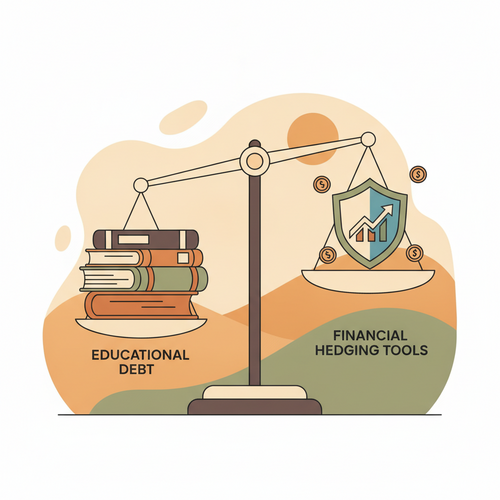
- Advanced hedging instruments provide critical protection and budget certainty.
Macroeconomic Imperatives of Sovereign Educational Debt
Global economic shifts continually influence national fiscal postures. Educational debt represents a substantial and growing sovereign commitment. This impacts national balance sheets and future economic growth trajectories. Effective management is paramount for long-term macroeconomic stability. Considerations extend to GDP growth, inflation rates, and employment levels. Sustained investment in human capital drives long-term national productivity. However, the funding mechanisms for this investment carry inherent financial risks.
Prudent fiscal authorities recognize the interconnectedness. Unmanaged educational debt can strain public finances. This potentially exacerbates national debt service ratios. It can also divert critical resources from other public sector initiatives. Strategic planning mitigates these complex financial exposures. It ensures the enduring viability of human capital development programs.
Deconstructing Sovereign Risk in Human Capital Investment
Sovereign risk encompasses various facets, including default risk and political risk. Educational debt often manifests as significant contingent liabilities for a nation. Credit rating agencies meticulously scrutinize these burgeoning obligations. A nation’s assessed capacity to service its debt directly impacts its borrowing costs. This extends to all future public and private sector projects.
Human capital investment, while crucial, necessitates careful fiscal provisioning. Poor educational outcomes can conversely exacerbate economic stagnation. This creates a feedback loop of diminished fiscal capacity. Long-term debt sustainability assessments are therefore paramount. They require a holistic view of national balance sheets. They also consider projected demographic and labor market trends. Understanding these interdependencies is crucial for fiscal resilience.
Interest Rate Volatility: A Persistent Threat to Debt Service
Interest rate fluctuations directly impact the cost of debt service. Floating-rate educational loans expose governments to immediate market shifts. Unhedged interest rate exposures create significant fiscal uncertainty. Unexpected rate hikes can strain national budgets considerably. This diverts crucial funds from other essential public services. Managing duration mismatch becomes a critical treasury function.
Yield curve steepening or flattening carries distinct implications for debt portfolios. A steepening curve often signals inflationary expectations or robust economic growth. A flattening curve might suggest impending economic slowdowns. Both scenarios require proactive debt management responses. Inflationary pressures often precede significant central bank rate adjustments. These adjustments directly influence sovereign borrowing costs. Effective mitigation strategies are therefore non-negotiable.
Advanced Hedging Instruments for Sovereign Debt Portfolios
Interest rate swaps are foundational instruments for managing rate exposure. They convert variable-rate debt obligations into fixed payments. This provides invaluable budget certainty for long-term educational commitments. Interest rate caps limit upward movements in variable rates. They offer robust protection without sacrificing potential benefits from rate declines. Conversely, interest rate floors protect against rates falling below a predetermined level. This is particularly relevant for asset-backed educational loan portfolios or floating-rate assets.
Interest rate collars combine caps and floors. They provide cost-effective protection by offsetting premium costs. These derivatives transfer specific interest rate risk to financial counterparties. Careful selection of hedging instruments depends on the sovereign entity’s risk appetite and prevailing market outlook. Each instrument carries distinct advantages and associated costs. A bespoke approach is frequently warranted.
| Hedging Instrument | Primary Benefit | Key Risk | Cost Factor |
|---|---|---|---|
| Interest Rate Swap | Converts variable to fixed payments, budget certainty | Basis Risk, Counterparty Risk | Swap Spread/Fixed Rate Leg |
| Interest Rate Cap | Limits upside interest rate exposure | Opportunity Cost if rates fall, Upfront Premium | Upfront Premium |
| Interest Rate Floor | Protects against falling interest rates (for assets) | Opportunity Cost if rates rise, Upfront Premium | Upfront Premium |
| Interest Rate Collar | Cost-effective band of protection (combines Cap & Floor) | Limited upside/downside participation, Premium balance | Net Upfront Premium/Rebate |
Implementing a Robust Hedging Strategy: Operational Frameworks
Establishing a formal Debt Management Office (DMO) is essential. This office should define clear risk management policies. These policies must govern all hedging activities. Quantifying basis risk and counterparty risk is unequivocally critical. Basis risk arises from imperfect correlation between hedged debt and the hedging instrument. Counterparty risk involves the potential default of the hedging provider. Selecting reputable financial institutions for execution is paramount.
ISDA Master Agreements govern these complex derivative transactions. These agreements standardize legal and operational aspects. Continuous monitoring of market conditions is required. Regular re-evaluation of hedging effectiveness is vital. Scenario analysis and stress testing enhance the resilience of the hedging program. These processes identify potential vulnerabilities under adverse market conditions. A structured, proactive approach safeguards national fiscal stability.
Expert Insight: “Effective interest rate hedging transcends mere financial transactions. It embodies proactive fiscal stewardship. It directly mitigates unforeseen macroeconomic shocks. This strategic foresight protects national investments in human capital.”
Case Studies in Sovereign Debt Management & Hedging
A prominent example involves Country Alpha, which managed significant variable-rate student loan portfolios. They successfully converted a substantial portion of these obligations. This was achieved through long-dated interest rate swaps. This strategic move stabilized annual debt service expenditures. It provided predictable budget allocations for education initiatives.
Conversely, Country Beta faced unexpected and sharp interest rate hikes. Their unhedged educational debt portfolio led to significant budget shortfalls. This imposed considerable fiscal strain. The absence of a comprehensive hedging policy proved exceedingly costly. Another nation employed a rolling hedging strategy. They utilized short-term interest rate options to manage immediate rate risks. This strategy balanced flexibility with cost efficiency. These varied approaches highlight diverse strategic considerations.
Futureproofing Fiscal Policy: ESG and Sustainable Debt Practices
Sustainable finance principles increasingly influence sovereign debt markets. Environmental, Social, and Governance (ESG) considerations impact investor perceptions. They directly influence borrowing costs. Investing robustly in education aligns intrinsically with social impact objectives. Responsible debt management underpins intergenerational equity. This ensures future generations are not unduly burdened. Transparency in sovereign debt reporting fosters greater market confidence.
Green and social bonds offer alternative funding avenues. These instruments attract a broader, impact-focused investor base. They channel capital towards specific sustainable development goals. Fiscal consolidation efforts must simultaneously consider social welfare. This integrated approach ensures both financial stability and societal progress. Sustainable debt practices are now a core component of modern treasury management.
Conclusion
Navigating sovereign obligations for educational debt demands sophisticated fiscal management. Interest rate hedging represents a strategic imperative. It protects national treasuries from unforeseen market volatility. Proactive implementation of advanced derivative instruments ensures budget certainty. This safeguards vital investments in human capital. Such foresight underpins long-term macroeconomic stability. How will your institution fortify its human capital investments against future financial volatility?